
Hobo Spiders in Idaho: How to Identify One
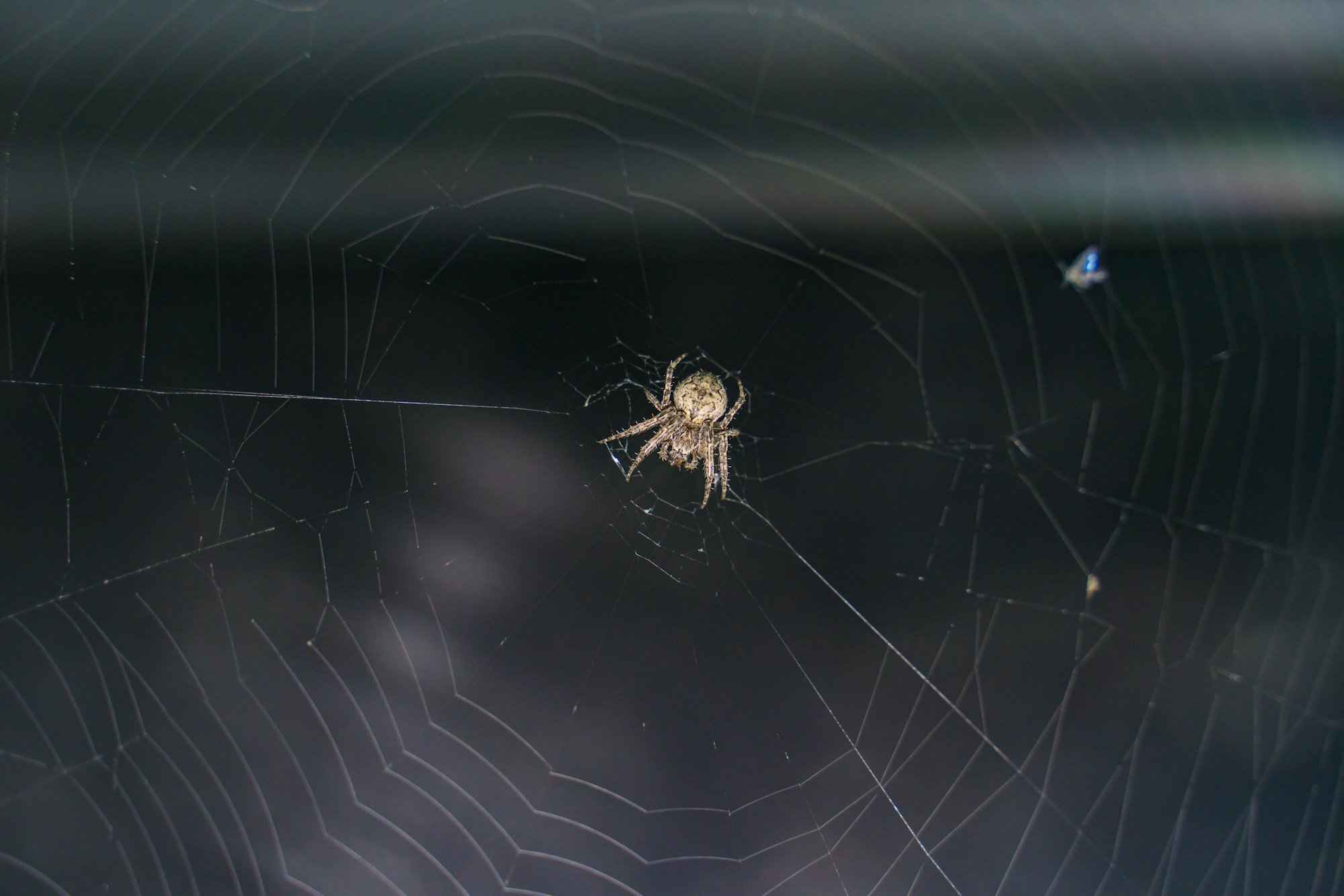
Hobo spiders are established across southern Idaho, and they are probably the most misidentified spider we get called about. Most of the spiders people show us and call hobos are wolf spiders or giant house spiders.
The practical answer up front: hobo spiders are not considered medically significant. The reputation for causing necrotic wounds came out of research in the 1990s that later work has not supported, and the Centers for Disease Control removed them from its list of venomous spiders of concern in 2017.
What a hobo spider looks like
Brown, roughly a third to a half inch in body length, with a leg span of up to two inches. The abdomen carries a pattern of light chevrons pointing toward the head, though this is faint and hard to read without getting closer than most people want to.
Two features separate them from the spiders they get confused with:
- No banding on the legs. Hobo spider legs are a uniform brown. If you can see distinct dark bands or rings, you are almost certainly looking at a giant house spider.
- They cannot climb smooth vertical surfaces. A spider in your bathtub that cannot get out is more likely a hobo than a wolf spider.
Wolf spiders are hairier, faster, and carry their egg sacs attached to the spinnerets, which hobos do not.
Where they live in the Treasure Valley
Hobos build funnel webs, not the flat orb webs people picture when they think of spiders. Look in:
- Window wells
- Basements and crawl spaces, especially near the floor
- Garages, behind stored boxes
- Gaps in retaining walls and woodpiles
- Under the lip of concrete steps
They are ground-level animals. A spider on your ceiling is not a hobo.
When you will see them
Late summer into fall is when the calls start, and it peaks in September and October. That is not because there are suddenly more of them. It is because mature males leave the funnel to look for females and start wandering into living spaces.
Properties along the canal corridors see more of it, because the moisture supports the insects that spiders eat. That covers a lot of Boise along the Ridenbaugh and New York canals, and plenty of Nampa near Lake Lowell.
What to do if you find one
Exclusion does more than spraying. Fit door sweeps, seal gaps around utility penetrations, fix window well covers, and move woodpiles away from the foundation. Spiders come inside because their food came inside first, so reducing the insects reduces the spiders.
If you want one out of the house without killing it, a glass and a piece of card works. They cannot climb the glass.
When it is worth calling someone
If you are seeing several a week indoors, if there are funnel webs in the crawl space, or if someone in the house is genuinely frightened of them, that is reasonable grounds to get it handled. Our spider control service treats the harborage and the entry points rather than just the spiders you have already seen, and we will tell you honestly if what you have is a house spider rather than a hobo.
Protection plans start at $39 a month and include spiders in the 32 species covered, with free re-service if they come back between visits.

